Speech Therapy for Children & Adolescents
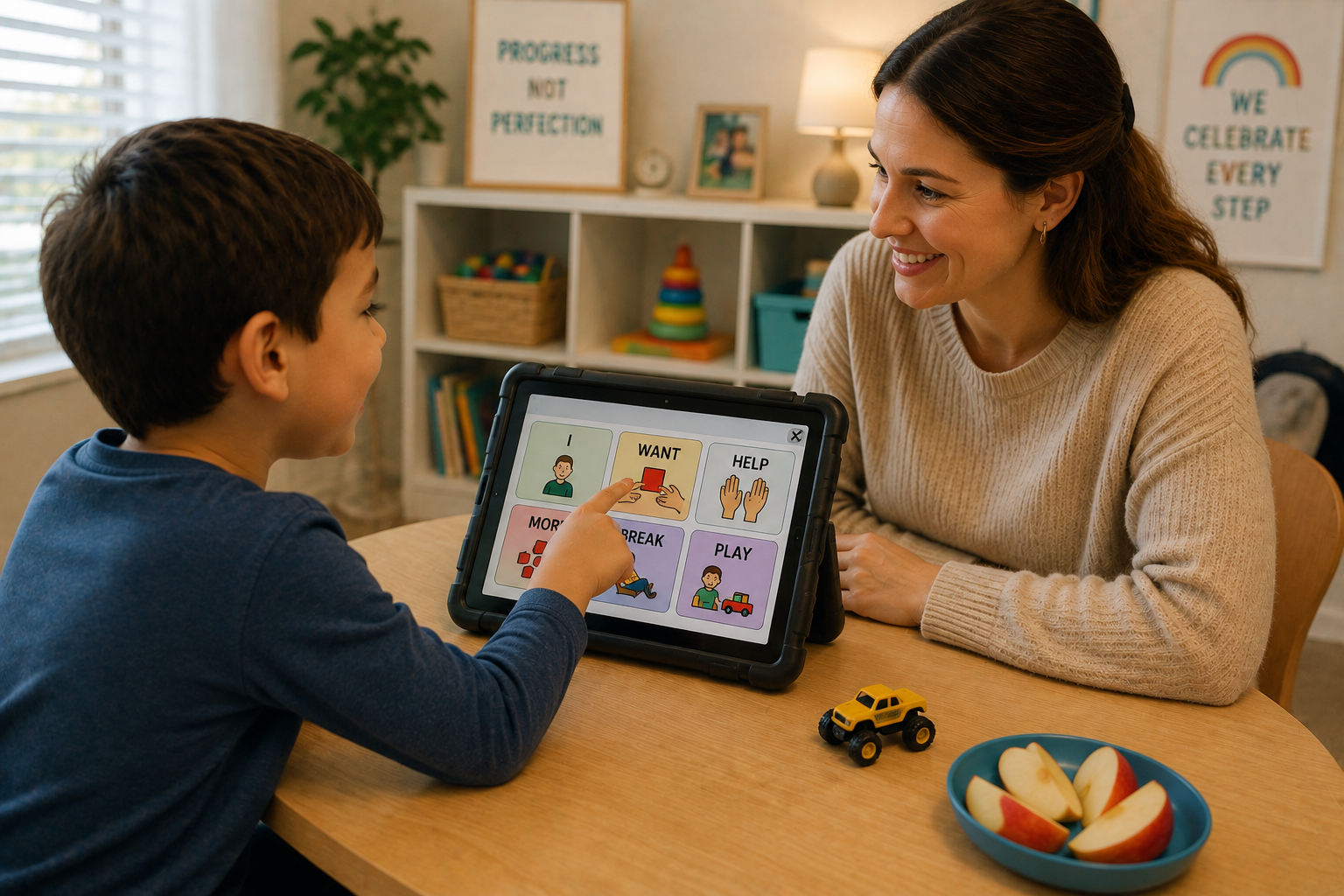
Communication for everyday connection.
Communication helps us share ideas, ask for help, express preferences, and build relationships. Speech therapy at Apex is part of our individualized approach to care for children and adolescents ages 2–18 in Fairfax County and Northern Virginia.
Families may have questions about speech clarity, understanding language, expressing thoughts, or joining conversations. The starting point is your child's strengths and the communication situations that matter most to them.
Understanding Speech-Language Therapy
Speech-language therapy addresses how a person understands and communicates information. Speech and language are related but different: speech involves producing sounds, while language involves understanding and expressing meaning. Social communication concerns how we use and interpret communication in interaction with others.
Support is not limited to spoken words. Communication can include gestures, writing, pictures, and other tools. A thoughtful assessment helps identify relevant goals instead of assuming that every child needs the same activities.
Areas of Support
Understanding & Expressing Language
Following meaningful directions, understanding questions, choosing words, explaining an idea, or organizing a story. An older student might work toward explaining a problem or asking for clarification during a class discussion.
Speech Production
Producing speech sounds and helping listeners understand a message. Goals depend on the nature of the child's speech needs and the findings of an assessment.
Social & Functional Communication
Sharing interests, participating in conversation, repairing misunderstandings, expressing boundaries, and asking for support. Goals should respect the person's communication style and priorities.
Augmentative & Alternative Communication
AAC includes ways to supplement or provide an alternative to speech, such as gestures, picture-based communication, and speech-generating tools. It is an established area of speech-language practice. Appropriate tools depend on individual needs; ask Apex about assessment options and the supports currently available rather than assuming a particular system is provided.
What Support May Look Like
A younger child might practice expressing a choice during play or sharing an idea while looking at a book. A school-age child might organize a short explanation. An adolescent might practice describing a concern, contributing to a group project, or communicating what would make an activity more accessible.
These examples illustrate possible goals, not a fixed Apex protocol. Activities should connect with the individual's interests and offer a meaningful reason to communicate.
The Apex Approach
Our philosophy combines individualized planning with family participation and collaboration across specialties when useful. Caregiver observations help connect communication goals to everyday experiences. When a child receives another service, related goals can be discussed without assuming that all services are necessary.
Therapy for Real Life
The important question is how communication works beyond an exercise: Can your child tell someone what they need? Explain a misunderstanding? Share something they are proud of? Everyday participation helps give goals their purpose.
Caregiver Support · Social Skills Groups
Common Questions
Is speech therapy only for children who are not talking?
No. Children and adolescents who speak may still need support with speech clarity, understanding language, organizing thoughts, or communicating in particular situations.
Does using AAC mean giving up on speech?
No. AAC can be used alongside speech. The aim is reliable, meaningful communication, with tools selected for the individual.
How can caregivers participate?
Share what communication looks like at home and what your child wants to communicate. Ask which practical opportunities fit naturally into your routines and what feedback would be useful to the clinician.

Ready to get started?
Tell us about your child's communication strengths and the moments when more support could help.