
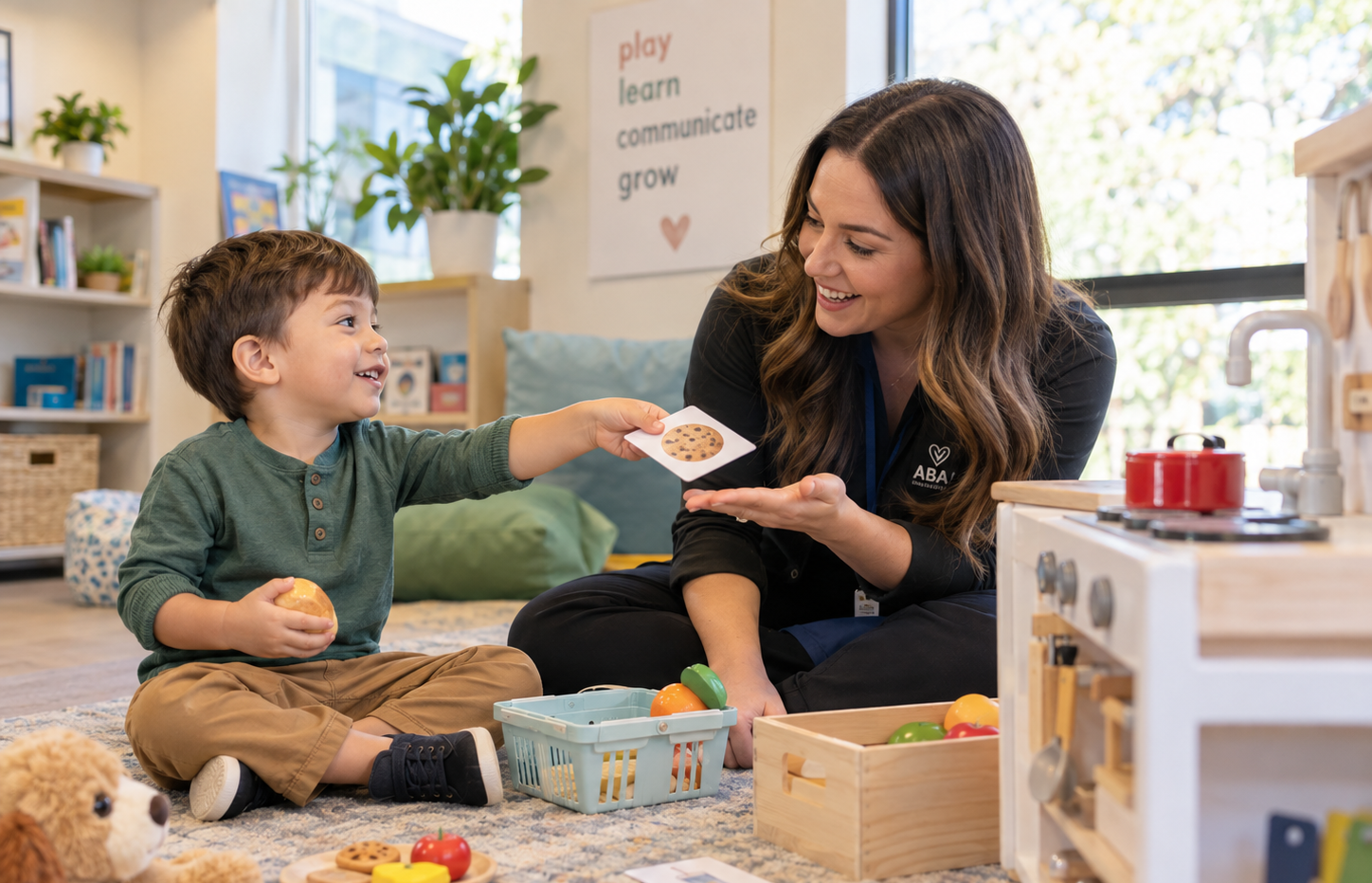
Applied Behavior Analysis (ABA) Therapy
Individualized Support for Meaningful Everyday Skills
Applied Behavior Analysis (ABA) Therapy at Apex Neurodevelopment Therapy Center provides individualized, evidence-based support for children and adolescents ages 2–18. ABA therapy focuses on meaningful skills in communication, learning, emotional and behavioral regulation, independence, social interaction, and everyday participation.
Services may take place in the clinic, at home, or in community settings depending on each child’s goals and treatment plan. Our clinicians collaborate with families and, when appropriate, with other members of the child’s care team to support consistency across everyday environments.

HOW ABA HELPS
What ABA Therapy Can Support
Communication & Functional Skills
Building communication skills that help children request what they need, ask for help, make choices, participate in routines, and connect with others.

Emotional & Behavioral Regulation
Developing strategies that support flexibility, coping, self-regulation, and successful participation in everyday situations.
Learning & Independence
Building skills for daily routines, self-care, learning, decision-making, and greater independence.
Social Skills & Participation
Practicing shared and pretend play, interaction, cooperation, self-advocacy, and participation with family, peers, and the community.

ABA Therapy Across Clinic, Home & Community
ABA skills become most meaningful when children can use them in everyday life. Depending on each child’s goals and treatment plan, therapy may take place in the clinic, at home, or in community settings.
Working across environments creates opportunities to learn skills in structured settings and practice them within real routines, relationships, and activities. Our team focuses on helping children generalize developing skills across people, places, and situations.
Working Toward Goals That Matter
Families bring an essential perspective: what your child enjoys, how they communicate, and which everyday moments need more support. A useful goal might involve asking for a break, getting ready for an activity, or participating in a shared task. For an adolescent, priorities may include self-advocacy, managing routines, and making choices with greater independence.
These are examples, not a standard program for every child. Planning should reflect the individual, and goals should be reviewed as needs and priorities change. When relevant, collaboration with speech or occupational therapy can help connect different aspects of a shared goal.
Speech Therapy · Occupational Therapy · Caregiver Support
Common Questions About ABA
Does every autistic child need ABA?
No. An autism diagnosis does not determine one plan for every child. Recommendations should consider individual needs, preferences, daily participation, and family priorities. Discuss the purpose of any recommended service and the alternatives with your child's care team.
Is in-home ABA a separate therapy?
No. In-home ABA describes where ABA services take place. Whether home, clinic, or community sessions are appropriate depends on the treatment plan and available arrangements. Ask our team about your child's needs and current options.
How long does therapy take?
There is no single timeline that fits every child. Goals, recommended frequency, and progress review should be discussed individually. This page does not promise a particular result or amount of therapy.

Ready to get started?

We’re here to help your family find the right next step.