Caregiver Education & Family Support
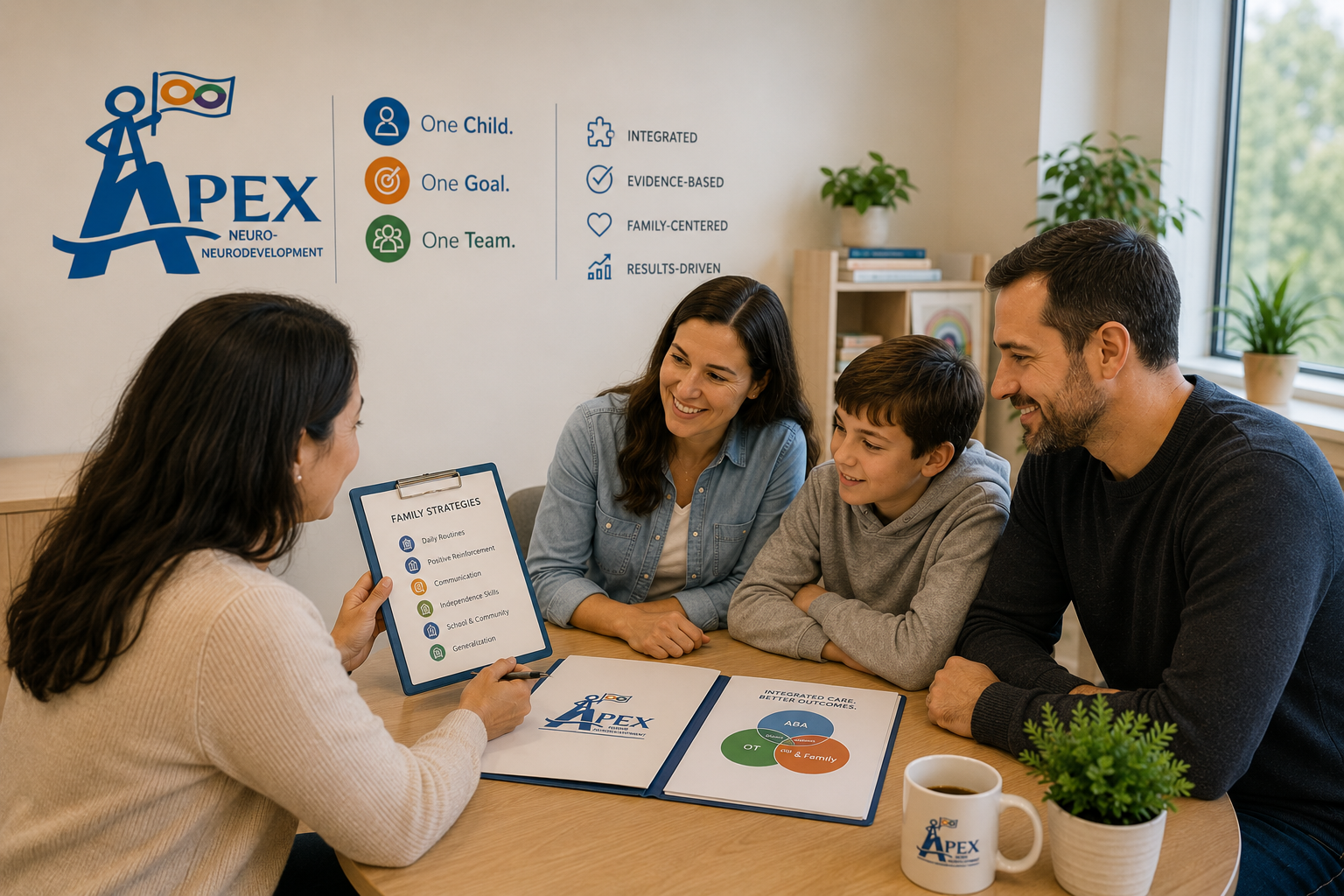
Practical support that fits your family's life.
You know your child's preferences, strengths, and everyday experiences. At Apex, that perspective belongs in the conversation about care. Caregiver education is an opportunity to ask questions, understand goals, and explore practical strategies with your child's team.
We serve families of children and adolescents ages 2–18 in Fairfax County, Northern Virginia, and the greater Washington, DC area. Our philosophy is collaborative: caregivers are partners, and they are not responsible for guaranteeing treatment outcomes.
Start With What Matters to Your Family
Support can begin with one routine or question. Perhaps mornings feel rushed, your child has difficulty telling others what they need, or an adolescent wants more independence. Sharing both successes and challenges helps identify realistic priorities.
There is no expectation that home should become a therapy room. Strategies should make sense within your family's capacity, culture, and everyday responsibilities.
Areas to Explore Together
Communication in Daily Life
Understanding how your child communicates, recognizing opportunities to offer choices, and discussing ways to make messages and expectations clearer.
Routines & Transitions
Looking at what happens before, during, and after a difficult moment. A useful discussion might focus on preparing for an activity, making steps more predictable, or recognizing when additional support is needed.
Independence & Self-Advocacy
Finding appropriate opportunities for a child or adolescent to make decisions, request help, or take responsibility for part of a routine, with support matched to their needs.
Understanding the Care Plan
Clarifying what a goal means, why a strategy is suggested, and how to share observations with the team. Questions and feedback are part of collaboration.
A Practical Way to Work Together
Begin with a specific priority: “Getting ready for an outing is difficult.” Describe what already helps and what is hard. Discuss one manageable idea with the clinician, including when it may not be appropriate. Then share what happened so the plan can be adjusted.
This illustrates a collaborative process rather than a required Apex coaching program. Families may need different types and amounts of support at different times.
Therapy for Real Life
Small, relevant opportunities can be more useful than a long list of assignments. For a younger child, that might mean communicating a choice during a familiar activity. For an adolescent, it could mean planning what to ask at an appointment or organizing part of the day.
The child's preferences and the family's capacity should remain part of the discussion. If a recommendation is difficult to use, that is useful information for the team, not a failure by the family.
Common Questions
Do I need to know which therapy my child needs?
No. You can begin by describing your concerns and priorities. Ask the team about appropriate evaluation and next steps.
What if a strategy does not work at home?
Share what happened, including what was manageable and what was not. Recommendations may need to be reconsidered or adapted with the clinician.
Can different caregivers be involved?
Tell the team who is part of your child's daily life and ask how participation and information-sharing can be arranged with appropriate permission.

Ready to get started?
Bring your questions. We can begin with the everyday moments that matter most to your family.